No products in the cart.: $0.00

Wood Element Crystals: Best Stones, Meanings & How to Wear Them
What Are Wood Element Crystals?
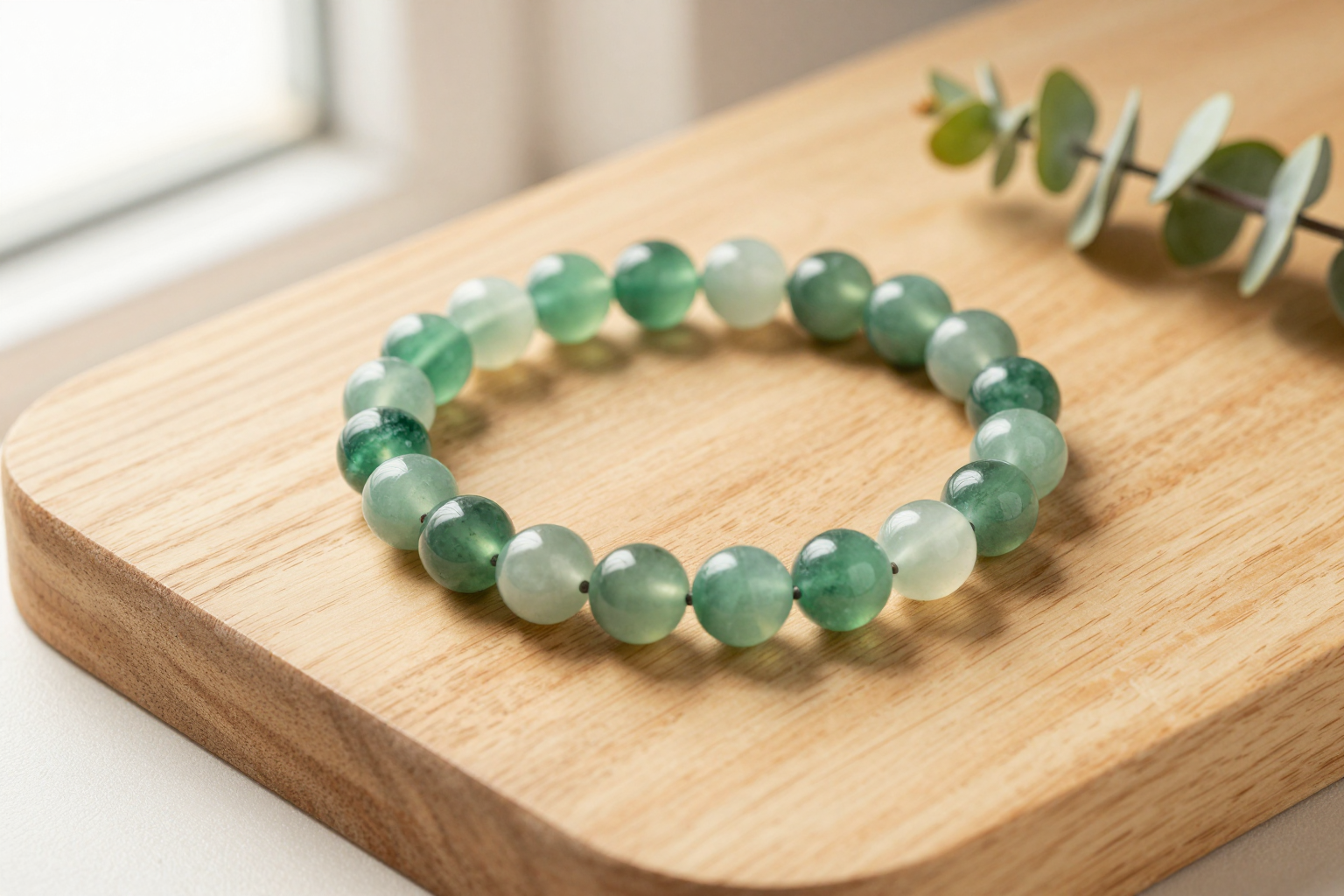
Wood element crystals are the green stones — green aventurine, jade, moss agate, prehnite, peridot and emerald — assigned to the wood phase of Chinese five element theory. They are worn for growth, flexibility and steady momentum. Wood is the energy of spring, of the east, and of the first push of new life after stillness.
Most crystal guides treat “green stones” as one lump: heart chakra, luck, money. The five element framework is more specific. It asks what kind of movement you need, and wood is the phase of expansion — a plan turning into a schedule, a business leaving the idea stage. This guide covers which stones belong to wood, how the phase interacts with the other four elements, and how to wear a wood bracelet.
Wood Element Crystals at a Glance
| Stone | Colour | Wood quality | Traditionally worn for |
|---|---|---|---|
| Green aventurine | Mint green with a soft shimmer | Momentum | Getting started and keeping things moving |
| Jade (nephrite) | Milky to deep forest green | Steadiness | Long-term resilience and quiet health |
| Moss agate | Clear with green moss-like inclusions | Patience | Slow, stubborn progress and recovery |
| Prehnite | Pale yellow-green, translucent | Ease | Building without burning out |
| Peridot | Olive green, glassy | Renewal | Fresh starts after a hard season |
| Emerald | Vivid saturated green | Vision | Clarity about direction |
| Malachite | Banded light and dark green | Intensity | Breaking out of a rut (see the care note) |
What the Wood Element Actually Means
The five elements — wood, fire, earth, metal and water — describe how energy moves, not what a material is made of. Wood is the expanding phase: upward, outward, branching. Its season is spring, its direction is east, its colour is green, and its paired organs in traditional Chinese medicine are the liver and gallbladder. The emotion of an imbalance is frustration — pushing against a door that will not open.
Two relationships matter when you choose a stone. Water nourishes wood, so an exhausted person often does better starting with water stones and adding wood once they have reserves. And metal controls wood, which sounds hostile but is not: a blade prunes a tree into shape. Structure, deadlines and boundaries are metal. Wood on its own becomes a thicket; wood with a little metal becomes a garden. Our guide to the five elements and how they interact lays out both cycles, and the yin yang explainer covers the polarity underneath them.
The Best Crystals for the Wood Element
Green Aventurine: The Starter Stone
Green aventurine is the most common wood stone in the cabinet, and the most forgiving. Its colour comes from tiny fuchsite inclusions, which give it a faint sparkle in the light. Traditionally it is the stone of opportunity — not sudden windfalls but the ordinary momentum of showing up. It is quartz, so it is hard, affordable and easy to wear daily.
Jade: Steady Growth
Jade has been the wood stone of Chinese material culture for thousands of years. Nephrite jade is tough rather than hard — an interlocking fibrous structure that resists breaking, which is exactly the quality it is worn for: not brilliance, endurance. It is the stone people give for health, for a long marriage, for a child starting school. Pale milky green beads read as restrained and work with almost any wardrobe.
Moss Agate: Patience With a Long Timeline
Moss agate is translucent chalcedony with green dendritic inclusions that look like moss trapped in glass. It is the wood stone for slow things: a healing injury, a dissertation, a business that will take five years rather than five months. No two beads match — if you dislike visible variation, choose jade instead.
Prehnite: Growth Without Strain
Prehnite is the pale, watery green that sits between wood and water, and it is the stone most often recommended to people who are growing something while running on empty. Its traditional association is calm preparation: the night before a launch rather than the launch itself. It is softer than quartz, so keep it away from metal spacers.
Peridot: The Renewal Stone
Peridot is olive green, glassy, and one of the few gemstones that comes in a single colour rather than a range. That green places it in wood, where it is used for the specific moment of starting over after a loss: a move, a divorce, a job that ended badly. It is moderately soft and sensitive to sudden temperature change, so keep it out of hot water.
Emerald: Direction and Vision
Emerald is the precious end of the wood spectrum and the only stone on this list most people will meet as an accent bead rather than a full strand. Its traditional quality is clarity of direction — the difference between working hard and working toward something. Because emerald is brittle and usually oil-treated, a single bead set among aventurine is the practical compromise.
Malachite: Powerful, and Not for Everyone
Malachite is banded green copper carbonate, visually the most dramatic stone in the wood family and the one that needs the most respect. Traditionally it is used for breaking a rut, but it is also soft, damaged by soaking, and tiring for many wearers. If you want the look without the maintenance, green banded agate is the calmer substitute.
How Wood Interacts With the Other Four Elements
| Relationship | What it means in practice |
|---|---|
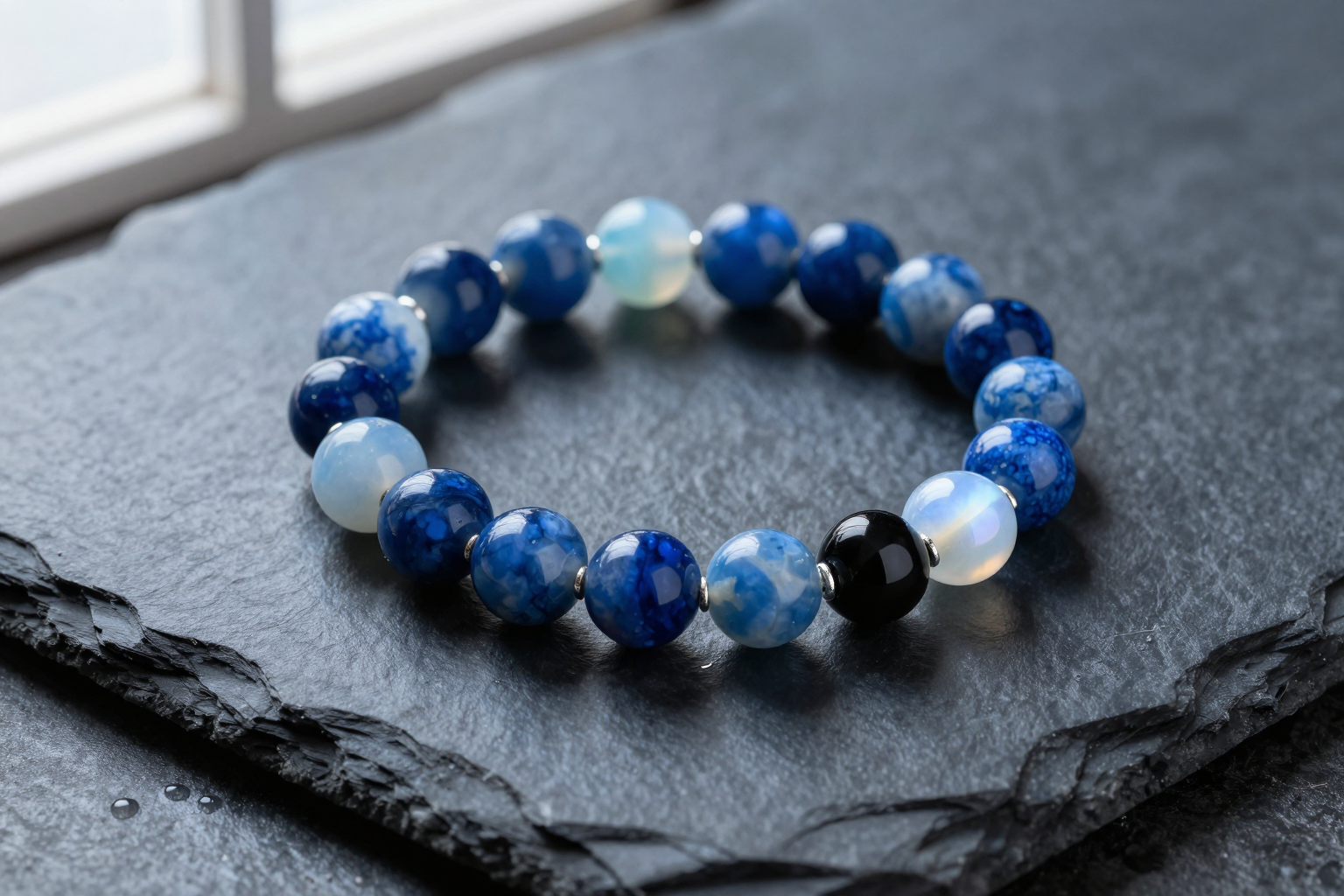
| Water nourishes wood | Pair green with sodalite, aquamarine or moonstone when you are depleted and growing at the same time. |
| Wood feeds fire | Green plus carnelian or garnet is the classic combination for a launch or a demanding month. |
| Wood controls earth | Useful for people who feel stuck or over-cautious; see our earth element guide for the opposite temperament. |
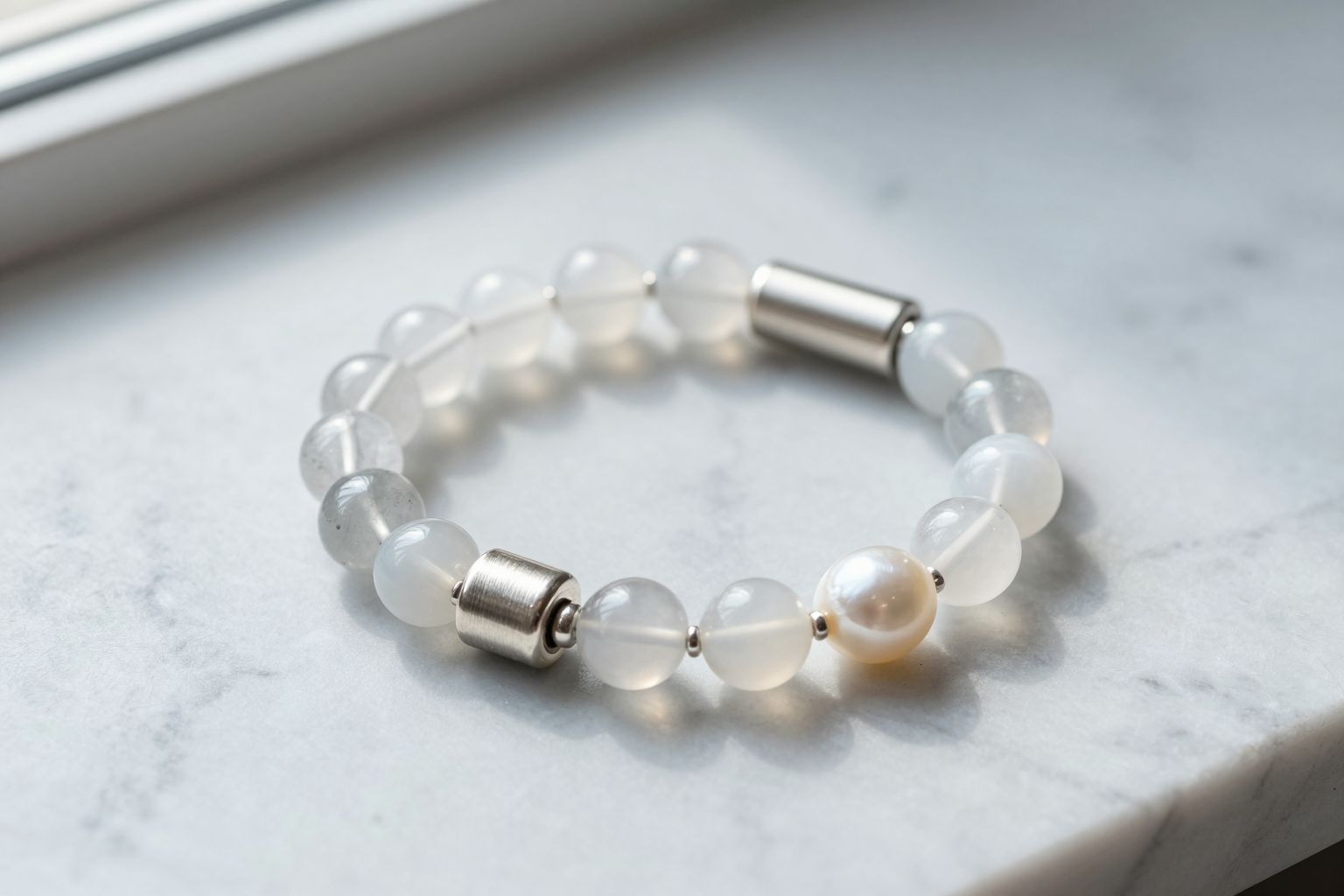
| Metal controls wood | A silver clasp or a hematite spacer keeps a wood bracelet from becoming scattered energy. |
How to Wear Wood Element Crystals
Elemental jewellery is not fussy, but a few conventions make a bracelet easier to use deliberately.
- Wear it on the left wrist if your goal is to absorb the stone’s quality — the receiving side in most crystal-wearing traditions. Move it to the right when you want the energy directed outward.
- Keep the palette green. Aventurine, jade, moss agate and prehnite together read as one coherent piece. Mixing in bright red or deep blue interrupts the wood reading.
- Add wood, not just green. A sandalwood, bodhi seed or rosewood bead between the stones grounds the bracelet visually and matches the element literally.
- Do not stack six green stones. Three to five beads of the main stone plus one or two accents is enough.
- Match it to the season. Wood is the spring phase. Many wearers bring green forward in March and April and switch to fire or earth stones in late summer.
- Get the size right. A bracelet that sits against the wrist keeps the beads in contact without pinching; our beading tutorial covers sizing and restringing.
Who Benefits Most From Wood Stones
Anyone in a Building Season
The clearest audience for wood is not a star sign but a stage of life: launching a company, studying for an exam, returning to work after a break. Green stones are the traditional companion for the months when progress is real but invisible from the outside.
Earth-Dominant Personalities Who Feel Stuck
In the controlling cycle, wood moves earth. People who are naturally steady, cautious and slow to change — the traits Western astrology associates with Taurus and Capricorn — often find green stones useful precisely because they are not their natural register. For the reverse problem, see our metal element guide, which is about boundaries rather than growth.
People Recovering From Burnout
Wood is the phase that comes after rest, and it is easy to rush. Coming out of a hard stretch, start with prehnite or moss agate rather than emerald or malachite — gentle growth rather than a second sprint. Our water element guide is the better starting point if you are still in recovery itself.
Cleansing and Care
Wood stones are softer and more porous on average than the quartz family, so the standard “rinse it under the tap” advice does more harm than good. Green aventurine and jade tolerate a quick rinse and immediate pat-dry. Prehnite, peridot and emerald should be wiped with a barely damp cloth, and malachite should never be soaked at all — repeated contact with water dulls the bands.
For energetic cleansing, use dry methods: moonlight overnight, sound, or a short rest on a selenite plate. Keep the bracelet away from perfume, chlorinated water and long exposure to direct sun, and store it in a soft pouch rather than loose in a drawer. Check the elastic every few months — dense green aventurine beads put real tension on the cord.
Frequently Asked Questions
What is the best crystal for the wood element?
Green aventurine is the most widely used and the easiest to live with. Jade is the traditional choice for endurance, and moss agate for slow, patient progress. Choose by the timeline you are working on rather than by which stone is strongest.
Is green aventurine a wood element stone?
Yes. In colour-based five element systems, green belongs to wood, and aventurine is the most common green stone in bead jewellery. Its shimmer comes from fuchsite inclusions.
Which hand should I wear a wood bracelet on?
Left is the usual choice for absorbing the stone’s quality; right is used when you want its effect directed outward. There is no universal rule, so try one wrist for a week before deciding.
Can I wear wood and metal crystals together?
Yes, and it is often the better design. Metal controls wood in the five element cycle, so a silver clasp or a hematite spacer gives a green bracelet structure rather than competing with it.
Do wood element crystals have to be green?
In colour-based systems, yes — green is the wood colour, along with the wood-brown of sandalwood and rosewood beads. Stones are assigned by colour first and tradition second.
Is malachite safe to wear?
Solid polished malachite is fine for normal wear, but it should not be soaked or worn in a pool, and it is too soft for a bracelet that gets knocked around. Keep it dry and stored separately from harder stones.
Find Your Wood Element Bracelet
Wood is the phase you reach for when something needs to start — or restart. Begin with green aventurine and add jade or moss agate as the project takes shape. Browse the wood element collection or the full five elements range, compare this guide with our fire element notes if you need drive rather than growth, or start with a triple harmony bracelet to balance several phases at once. The zodiac crystal chart is the fastest way to match a stone to your sign.

 Please wait…
