
No products in the cart.: $0.00

How to Tell If a Crystal Bracelet Is Real: 8 Simple At-Home Tests
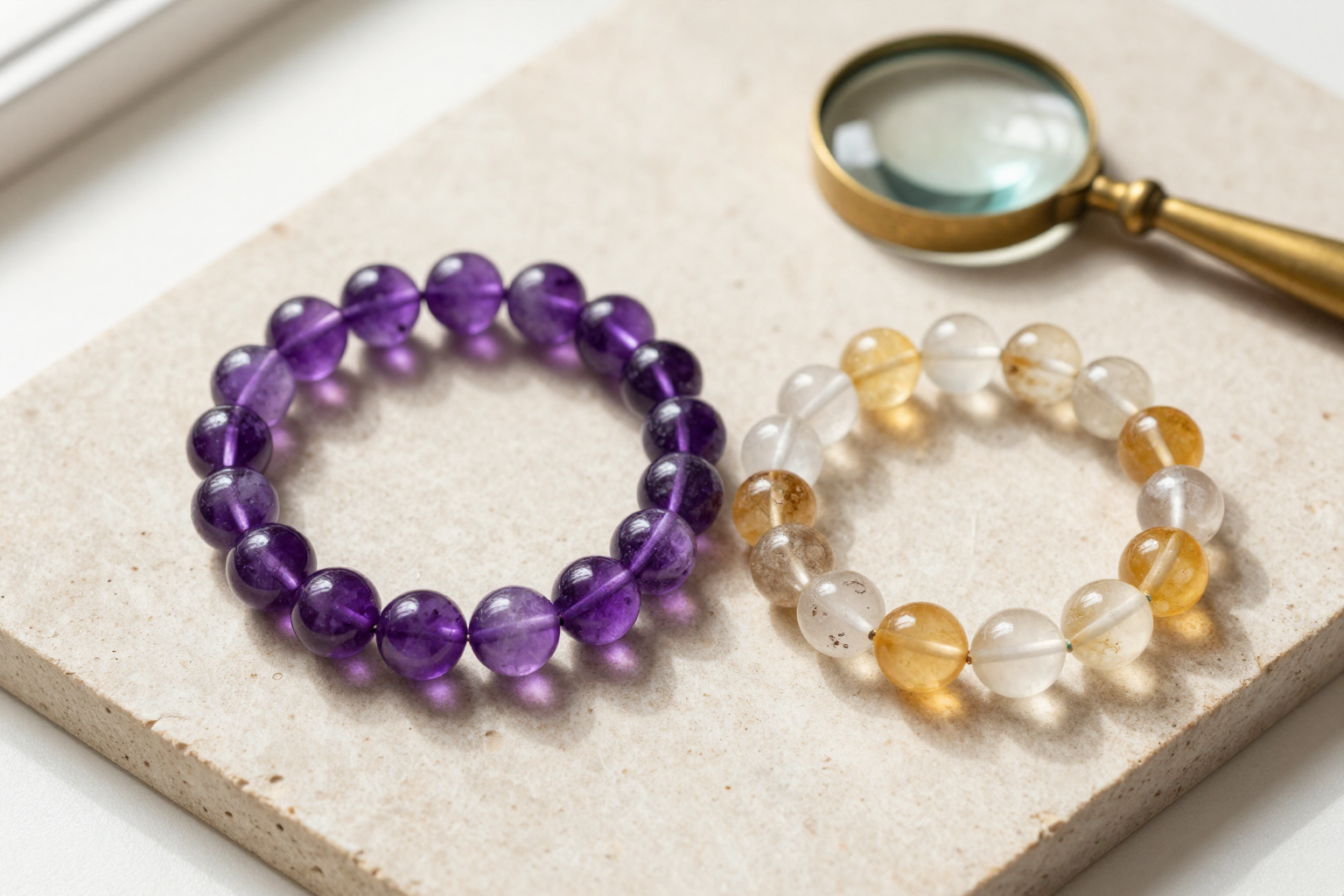
How to Tell If a Crystal Bracelet Is Real: The Short Answer
Real crystal bracelets feel cool to the touch and warm up slowly in your palm, weigh noticeably more than plastic, and show natural imperfections such as cloudy zones, fine fractures, and uneven color. Glass imitations often contain round air bubbles and perfect, uniform dye. Eight simple tests below can confirm most stones in minutes.
The 8 At-Home Tests at a Glance
| Test | Real crystal | Imitation |
|---|---|---|
| Cool-touch | Stays cold for 15–30 seconds | Warms to skin temperature almost instantly |
| Weight | Heavier than it looks | Light, hollow, plastic feel |
| Inclusions | Clouds, veins, color zoning | Flat, perfectly uniform color |
| Loupe check | Frozen fractures, inner sparkle | Small round gas bubbles |
| Sound | Deep, muffled clack | Sharp, high glassy ring |
| UV flashlight | Weak, mineral-specific glow | Bright uniform glow, or none |
| Strand check | Knotted thread, snug beads | Glued plastic spacers, flimsy cord |
| Price logic | Discloses treatments | “Too perfect,” suspiciously cheap |
The 8 Simple At-Home Tests, Explained
1. The Cool-Touch Test
Genuine stone is an excellent heat conductor, so a crystal bracelet that has been sitting on your desk feels distinctly cool — even cold — against the inside of your wrist. Press a bead to the back of your neck or wrist and count. Real crystal keeps that chill for roughly fifteen to thirty seconds before slowly warming. Glass and resin warm almost immediately because they conduct heat poorly. For a fairer comparison, rest the bracelet on a marble counter for a minute first; stone will grab the countertop’s coldness far faster than plastic.
2. The Weight Test
Quartz-family stones run about 2.6 grams per cubic centimeter, obsidian around 2.4, and dyed howlite near 2.3 — all clearly heavier than acrylic, which sits near 1.2. Hold the bracelet in one palm and a similar-sized metal or plastic object in the other. Real beads have a dense, grounded heft that fakes rarely match. This test catches most plastic and resin imitations instantly, though it will not separate natural quartz from glass, since both are relatively dense.
3. The Eye Test: Inclusions and Color Variation
Stone forms under chaotic natural conditions, so real beads are imperfect by nature. Look for soft cloudy zones, threadlike veins, tiny internal fractures, or gentle bands of lighter and darker color as each bead turns in the light. — no two beads should be identical. Beads whose color is completely flat, vivid, and identical across the whole strand deserve suspicion, especially with dyed materials where color pools unnaturally around the drill holes.
4. The Loupe Test: Looking for Glass Bubbles
A jeweler’s loupe — or even a phone camera zoomed all the way in — is the single most reliable home test for separating glass from crystal. Scan each bead against bright light. Glass made by melting almost always traps small, perfectly round gas bubbles that natural quartz never produces. Natural inclusions look like frozen fractures, feathers, or crystalline clusters, not smooth spheres. One caveat: obsidian and molded glass are both volcanic-style glass, so judge obsidian by its weight, luster, and conchoidal chip patterns instead — our obsidian guide shows what genuine volcanic glass should look like.
5. The Sound Test
Hold the strand loosely by its cord and gently tap two beads together with your fingernail or a coin. Natural crystal gives a deep, slightly muffled clack. Glass beads produce a sharper, higher, more ringing tone, while plastic beads sound dull and hollow, closer to a tap on a bottle cap. It takes a little practice to calibrate your ear, so test a known-real stone — a pebble from the garden works — before judging your bracelet.
6. The UV Flashlight Test
Shine a 365 nm UV flashlight in a dark room. Some genuine stones fluoresce — certain fluorites glow violet, some calcites orange — while quartz-family beads like amethyst usually stay dark. The red flag is a bright, uniform glow: many epoxy resins and dyed polymer imitations light up evenly, which real stone never does. No glow at all is normal for many authentic crystals, so treat this as a supporting clue, never a verdict on its own.
7. The Strand and Knot Test
Quality crystal bracelets are strung on elastic cord or knotted thread with tight knots between beads, and the beads themselves are consistent in shape and drill hole. Cheap imitations often skip the knots, glue oversized plastic spacers, and show glue smears near the holes. While this test cannot identify the stone itself, it reliably separates sellers who care about craft from those cutting every corner — a useful signal when the material tests above are ambiguous.
8. The Price and Transparency Test
Finally, let the price tag do some talking. A strand of thirty genuine amethyst beads requires mined stone, cutting, drilling, and polishing; if the price is a couple of dollars with free shipping, something in that chain is fake. Trustworthy sellers answer questions directly: Is this heat treated? Is it dyed? Where was it mined? “Natural” claims paired with total silence about origin are a classic red flag. Remember that heat treatment is a legitimate, common practice — much natural citrine on the market began as amethyst that was gently heated — but it should always be disclosed, as we explain in our citrine meaning guide.
What Real Stones Look Like Up Close
Amethyst, Citrine, and Clear Quartz
Real amethyst shows purple color zoning — deeper at one end of a bead, paler at the other — with white cloudy streaks running through it. Natural citrine is a pale, smoky honey color; the neon orange beads flooding the market are heated amethyst, still real quartz but worth knowing what you paid for. Clear quartz should be glassy yet alive, with internal fractures that catch light in sharp little flashes.
Rose Quartz and Moonstone
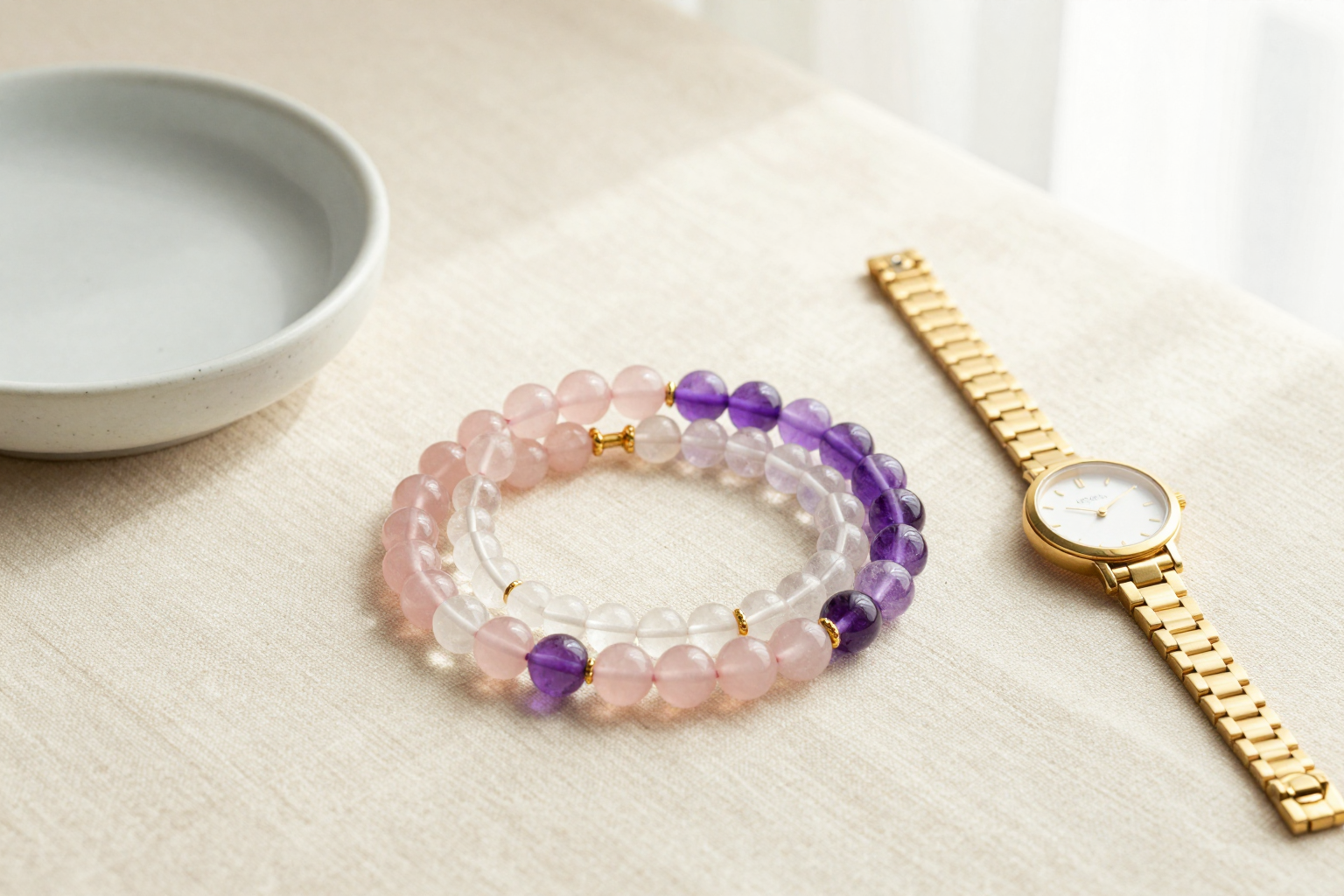
Genuine rose quartz is hazy and milk-translucent rather than see-through, with a soft, even pink that never glows electric. If a “rose quartz” strand is transparent with a strong magenta tint, you are likely holding dyed glass. Real moonstone shows adularescence — a billowy blue or white sheen that floats across the bead as you tilt it. The sheen moves from within the stone; painted-on shimmer stays fixed on the surface.
Obsidian and Tiger’s Eye
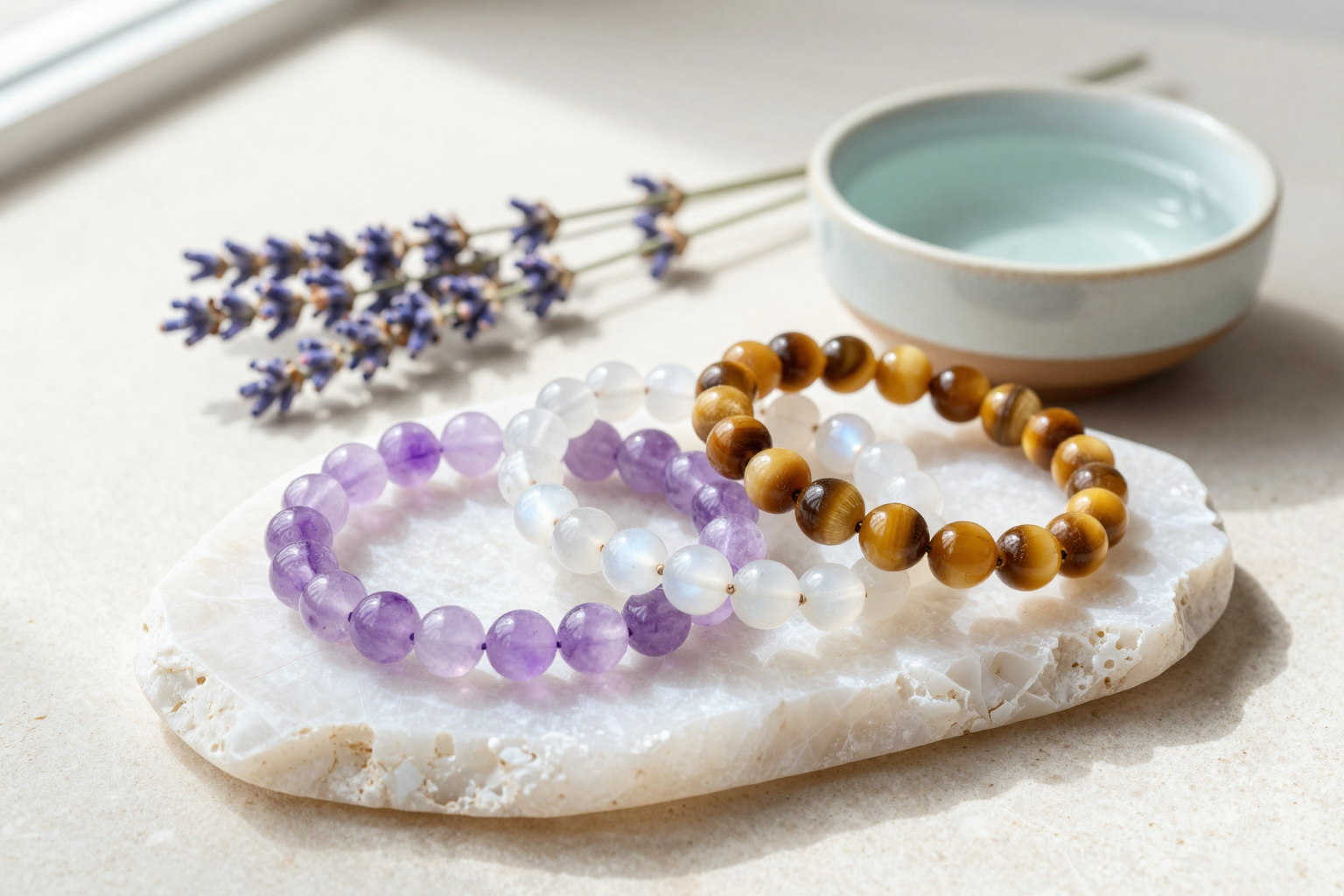
Real obsidian is a natural volcanic glass: jet black with mirror luster and sharp conchoidal edges where it once chipped. It feels heavier than glass bracelets of the same size and often reveals a faint smoky translucence at thin edges. Tiger’s eye shows silky chatoyance — a band of golden light that rolls along parallel fibers as the bead turns. Imitations print the stripes on the surface; the real effect moves because the fibers run through the stone.
Red Flags That Suggest a Fake
- Identical beads, bead after bead — nature does not copy and paste.
- Bright, saturated color that pools around drill holes — a signature of dye.
- Round bubbles visible under magnification — glass, not crystal.
- Warm-from-the-start feel — resin or plastic, not stone.
- Vague answers about treatment or origin — honest sellers have nothing to hide.
When to Consult a Professional
Home tests settle most everyday doubts, but expensive purchases justify expert eyes. A local gemologist, an accredited appraiser, or a reputable gem lab can run refractive index and specific gravity measurements for a modest fee. If you paid serious money for a strand marketed as rare — “ Paraiba-colored” quartz, natural tanzanite beads — get it verified before the return window closes.
Frequently Asked Questions
Can a real crystal fail the cool-touch test?
Yes. If the bracelet has been worn or sitting in a warm pocket, it will already be at skin temperature. Rest it on a cool surface first, then retest.
Do small scratches mean my bracelet is fake?
No. Soft stones like moonstone, fluorite, and selenite scratch easily with daily wear, while hardened steel keys can mark even quartz. Wear patterns are normal — see our crystal care guide for cleaning and storage tips that minimize them.
Why is my “citrine” bracelet uniform orange?
Most vivid orange citrine is heat-treated amethyst. It is still genuine quartz, but natural citrine is usually paler and smokier. Ask the seller to confirm treatment in writing.
Is a glass bracelet bad to wear?
Not at all — glass and resin beads look lovely and cost less. It only becomes an issue when you are sold glass at natural-crystal prices. Once you know what you own, wear it happily.
Can I combine these tests into one quick verdict?
Absolutely: cool-touch plus weight plus loupe check catches roughly ninety percent of fakes in under two minutes. Escalate to professional testing only when a strand passes those three but the price still seems too good.
Does which wrist I wear it on matter for authenticity?
No — authenticity and tradition are separate questions. If you are curious about left-versus-right wearing customs, we break them down in our wrist guide.
The Bottom Line
Trust the evidence: chill, heft, imperfection, and honest pricing. Run the three quick tests — cool-touch, weight, and the loupe check — and most imitations unmask themselves on the spot. And once you know your beads are the real thing, choose pieces that are verified and thoughtfully made from the start. Explore our natural-stone collections by zodiac sign or by five elements, or discover the crafted meaning behind our Triple Harmony bracelet — every strand is natural crystal, transparently described, ready to wear.

 Please wait…
